2026-10-12 · Tom Reynolds
Dryer Vent Cleaning: Essential Safety Guide
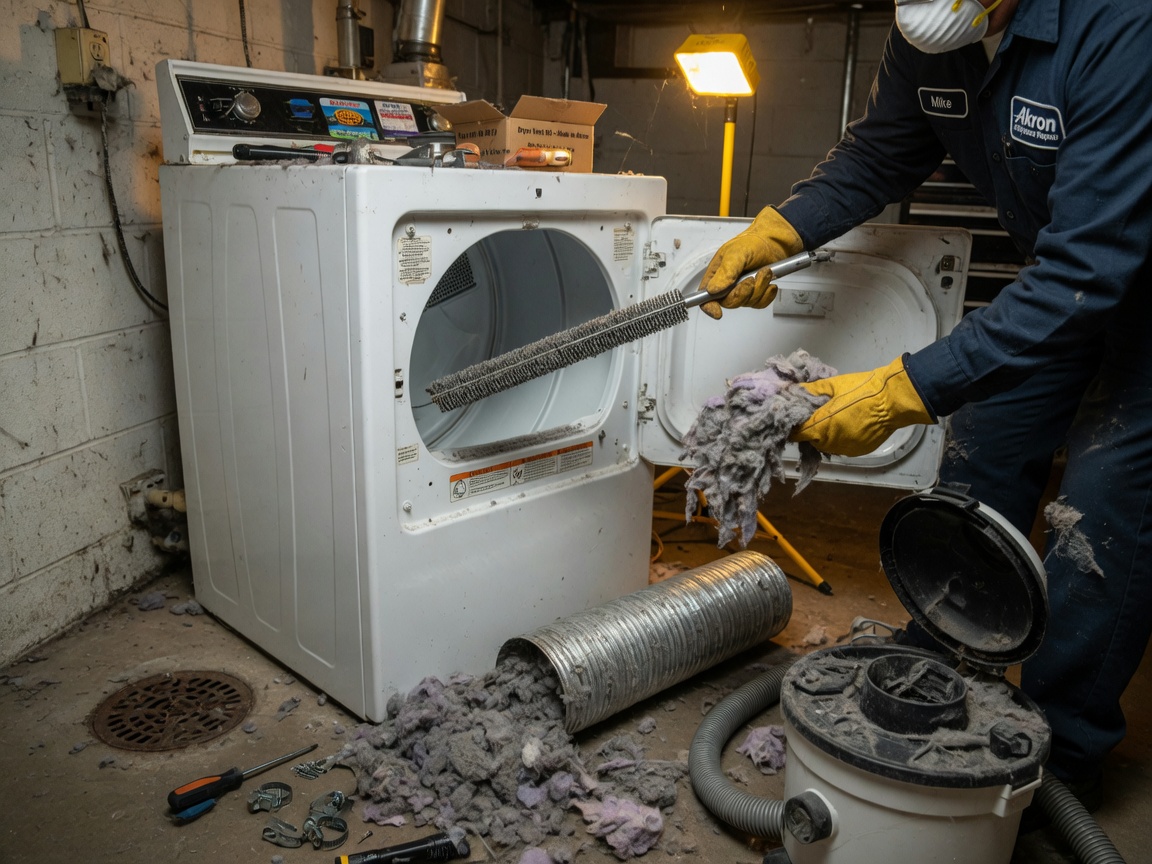
Cleaning dryer vents every 6-12 months prevents lint fires in Akron homes. Summit County's humid continental climate brings cold winters that drive longer drying cycles and heavier lint accumulation, especially in older homes found in Highland Square, Ellet, and Goodyear Heights. Proper airflow keeps exhaust temperatures down and reduces the chance of ignition inside the vent pipe.
Fire Risks from Clogged Vents in Summit County Homes
Lint buildup narrows the vent path and traps heat near the dryer. In Summit County neighborhoods with homes built before 1980, narrow metal ducts and long horizontal runs increase this hazard. A single clogged vent can raise exhaust temperatures enough to ignite trapped lint. Homeowners in Kenmore and Firestone Park often notice longer drying times first, followed by a burning smell. Regular cleaning restores full airflow and keeps surface temperatures within safe limits. Ignoring the vent also stresses the heating element, which can fail prematurely in the cold months when dryers run more often.
Impact of Akron's Cold Winters on Vent Performance
Winter temperatures in Akron frequently drop below freezing and force dryers to work harder. Moist air inside the vent can freeze at exterior terminations, creating ice dams that trap additional lint. Homes in North Hill and West Hill sit on slight slopes that direct wind against vent outlets, worsening the problem. Longer cycles in January and February push more lint into the line before it can clear. Technicians see the most restricted vents after prolonged cold snaps because residents run multiple loads without checking the exterior flap. Clearing the line before winter arrives prevents both fire and ice issues.
Identifying Buildup in Neighborhoods like Highland Square and Ellet
Older single-family homes in Highland Square and Ellet typically have 4-inch rigid metal vents that collect lint faster than newer flexible lines. Residents notice clothes still damp after a full cycle, hot dryer exteriors, or a musty odor near the laundry area. In Middlebury and Firestone Park, basement installations with multiple elbows trap debris that homeowners cannot reach without tools. Checking the exterior vent flap for weak exhaust or visible lint confirms the need for service. These signs appear earlier in homes near the University of Akron where laundry use stays high year-round.
Professional Cleaning Steps for Safety
A technician disconnects the dryer, removes the vent pipe sections, and uses a rotary brush to break up compacted lint. Vacuum extraction follows to clear debris from the full run to the exterior termination. In Cuyahoga Falls and Kent homes with longer runs, cameras verify complete removal before reassembly. The process takes 45-90 minutes and restores proper airflow without damaging the duct. Homeowners can review before-and-after photos to confirm results. This approach avoids the incomplete results common with consumer kits that only reach the first few feet.
When to Schedule Service After DIY Attempts
Homeowners who try brushing the vent themselves often leave compacted lint near elbows or the exterior cap. When drying times remain long or the exterior flap stays closed during operation, professional equipment is required. The Dryer Vent Cleaning page outlines what full service includes for Summit County properties. If the dryer itself overheats, pair vent cleaning with Dryer Repair to address any heating-element issues. The DIY vs. Professional Appliance Repair: Key Differences article explains why certain jobs exceed homeowner tools and safety margins.